Call (619) 775-3787 now if your Cane Island roof is leaking. Dispatch records the leak location and sends a technician the same day. Contemporary designs join steep shingle slopes to low-slope membrane sections. Water ponds at those transitions during Gulf downpours. One clogged scupper backs water under the shingle edge. Waiting lets the ponded water find every nail hole.
Complete these five tasks while the technician is on the way.
- Set out buckets under drips.
- Shift furniture clear of drips.
- Shoot photos of every stain.
- Cut power near water.
- Leave the roof to the pro.
The technician clears the drainage, seals the transition, and tests it watertight before leaving. For roof repair Cane Island trusts, call now.
Modern rooflines concentrate water at transitions. A fast call seals the transition before the next storm.
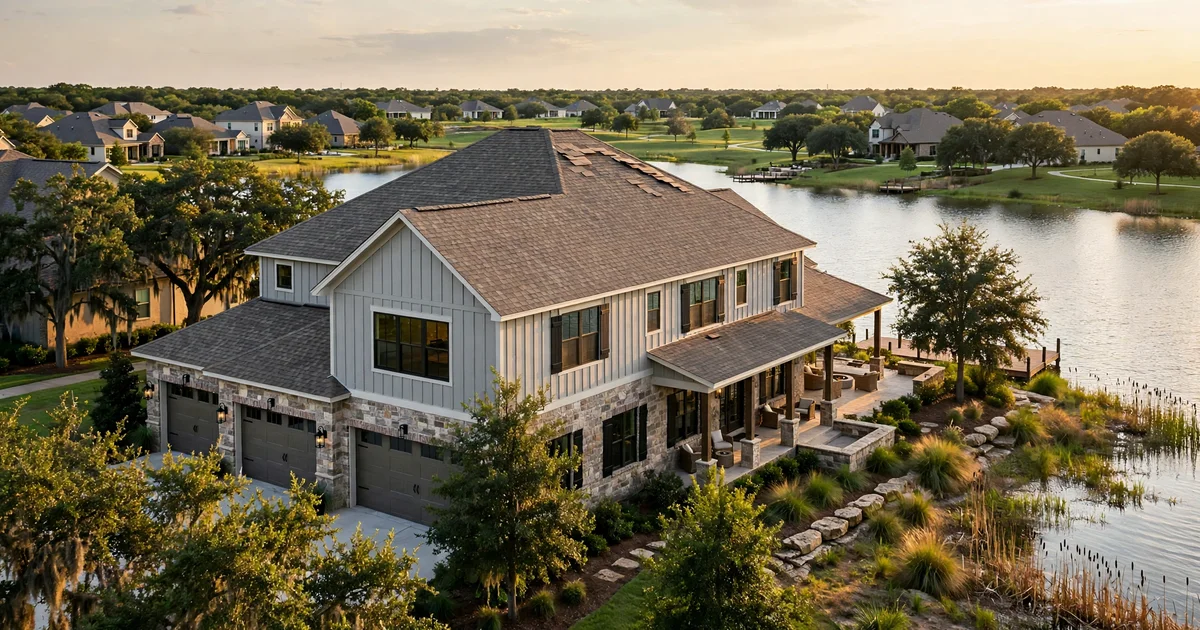
Cane Island roofs differ because contemporary executive homes mix steep and low-slope geometry. Architects pair dramatic steep pitches with flat porch and garage sections. The steep-to-low transition is the hardest joint on the roof. Shingles cannot shed water onto a flat section without help. Roof repair Cane Island wide starts at the transition detail.
Signal 01Strong Community Character
Strong community character keeps design standards high. The HOA approves exterior changes, including roof material and color swaps. Submit samples before scheduling full-slope work. Approval adds days to replacement timelines. Targeted leak repairs rarely need approval.
Signal 02Newer Construction
Newer construction means newer materials but early exposure. Spring storms test the transitions within the first years. A scupper is the drainage opening letting water exit a low-slope section. Clogged scuppers pond water in hours. A typical Cane Island home carries a 28- to 38-square roof (2,800 to 3,800 square feet). Transition repairs run 1 to 4 squares (100 to 400 square feet). Crews doing roof repair in Katy clear scuppers before diagnosing transition leaks.
Signal 03Mixed Geometry, Design Standards,
Mixed geometry, design standards, and early storm exposure define Cane Island. Keep the transitions clear.
Typical repairs in Cane Island
The typical repairs in Cane Island are transition flashing rebuilds, scupper and drainage clearing, and low-slope membrane patches.
Transition flashing rebuilds renew the metal where steep shingles meet low-slope membrane. The rebuild installs a watertight pan flashing under the shingle edge and over the membrane. Pan flashing is a wide metal sheet bridging the two surfaces. Correct laps shed water onto the membrane, not under it.
Scupper and drainage clearing removes the debris ponding water on flat sections. The technician clears scuppers, downspout heads, and the membrane surface. Clear drainage drops ponding time from days to minutes.
Low-slope membrane patches seal punctures and seam gaps in the flat sections. The technician cleans the area, applies primer, and adheres the patch. Patched membranes test watertight before the crew leaves.
Roof repair Cane Island Katy wide masters the transition. For roof repair in Katy, call now and stop the next roof leak at the scupper.