Hail damage roof signs in Houston
After a storm, learn the hail signs roofers look for before filing a claim.
Fall roof inspection season arrives in Houston before the winter rains. This roof inspection checklist for Houston homeowners covers the exterior roof, attic, gutters, and drainage. Use it to inspect your roof once each fall and once each spring, and learn which findings mean calling a professional. Call now at (619) 775-3787 to schedule a professional inspection.
Speak to a roofing specialist (619) 775-3787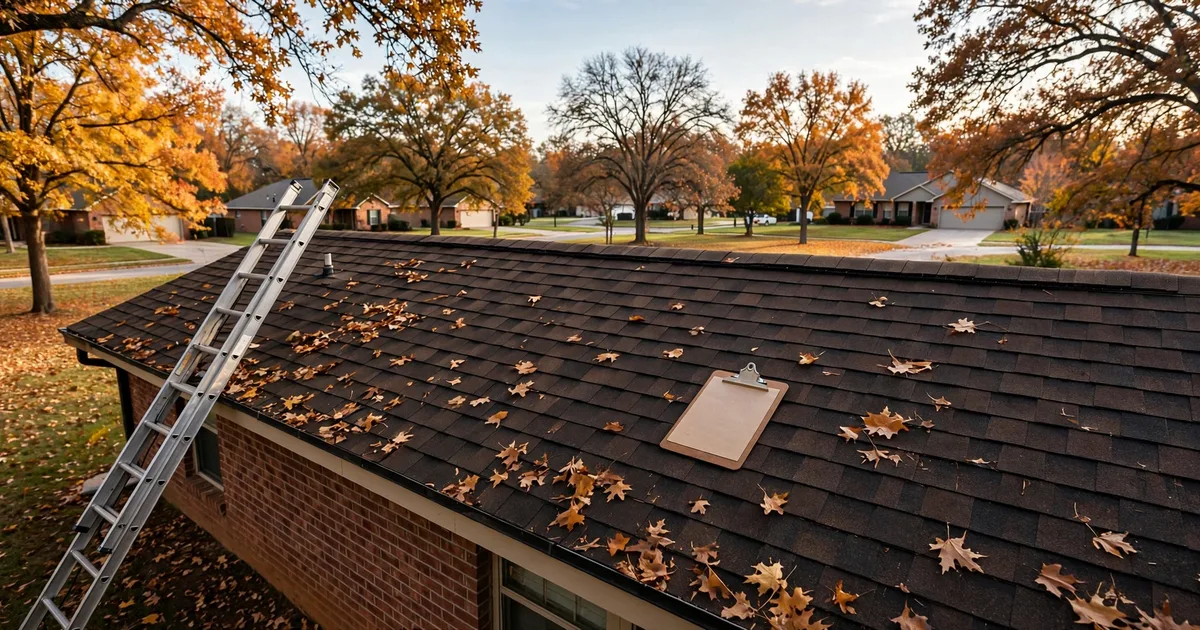
Fall is the right season because it follows hurricane season and precedes the winter rains, giving homeowners a clear window to fix summer damage. Houston roofs take a beating from June through September. Heat bakes the shingles. Storms lift edges and crack sealant. Fall catches all of it before cold fronts bring weeks of rain.
According to the Insurance Information Institute (2024), wind and hail trigger a claim at about 1 in 36 insured homes each year and account for roughly 41 percent of all homeowners insurance claims. That makes storm damage the most common roof problem by far. A fall roof inspection finds that damage while repair crews still have open schedules and dry weather to work in.
Heat damage is the second reason fall works. Shingle temperatures on a Houston roof reach 150 to 170 degrees in August. That heat dries sealant strips and ages the asphalt. An October inspection catches curled edges and dried seals before winter rain exploits them.
Houston's storm calendar gives fall its edge. Hurricane season runs June 1 through November 30. Most tropical activity peaks in August and September. An October inspection catches wind-lifted shingles and torn flashing from those peak months while temperatures still allow sealant to cure properly.
Call now and speak to a roofing specialist about your roof.
The exterior inspection covers shingles, flashing, vents, skylights, and the roof edge for damage, gaps, and wear. Work from the ground first with binoculars, then from a ladder at the eaves. Never walk a wet or steep roof.
A valley is the V-shaped channel where two roof slopes meet. Ridge caps are the shingles that cover the roof peak. Flashing is the metal strip that seals roof joints. Dried sealant at any of these points admits water long before shingles fail. The problems this checklist finds are exactly what Houston roof repair services fix every fall: lifted shingles, open flashing, and cracked vent boots.
Sealant touch-ups are the one exterior fix most homeowners handle. A tube of roofing sealant and a caulk gun reseal small flashing gaps and nail heads. Anything larger, anything on a slope above the eaves, and anything involving shingle replacement belongs to a roofer.
Ladder safety decides how much of this checklist you do yourself. Set the ladder on level ground at a 4-to-1 angle: 1 foot out for every 4 feet up. Keep three points of contact. Work the eaves and gutters from the ladder, never from the roof slope itself.
Inside, you check the attic for daylight through the deck, damp insulation, and mold, plus ceilings and walls for stains. The attic tells the truth about the roof. Water leaves evidence here even when the shingles look fine from outside.
Daylight through the deck means a hole or gap in the roofing above. Wet insulation loses R-value fast. A damp area 2 feet by 2 feet (4 square feet) already signals a real leak, not condensation. Visit the attic on a sunny day; pinhole leaks show up as bright dots against the dark deck.
Insulation depth matters too. Houston attics need 12 to 15 inches of blown insulation for proper R-value. Thin or compressed insulation near the eaves often hides moisture damage, so probe those areas by hand during the fall check.
Mold follows moisture within 24 to 48 hours in a Houston attic. Black spots on the deck underside or on rafters signal an active leak, not old damage. Mold remediation belongs to specialists; the roofer fixes the water entry first so the mold work holds.
Gutters and drainage carry the roof's full water load each storm, so the inspection clears debris and confirms every downspout flows. Clogged gutters push water under the eaves and into the fascia, where rot starts.
A downspout is the vertical pipe that carries gutter water to the ground. A 1,000-square-foot roof sheds about 620 gallons of water in 1 inch of rain. That volume overwhelms any gutter choked with leaves. Run a hose at the high end and watch each downspout discharge. Standing water in the gutter signals a slope problem.
Fascia and soffits show gutter failure first. The fascia is the vertical board behind the gutter. The soffit is the horizontal underside of the eave. Peeling paint or soft wood on either one means water is getting behind the gutter, and the gutter pitch or hangers need correction.
Clogged gutters overflow into fascia and soffits within a single heavy storm. Call (619) 775-3787 to schedule a professional inspection before the winter rains arrive.
After finding problems, document each one with dated photos and schedule a professional inspection for anything beyond debris and minor sealant. Homeowners handle cleaning and observation. Roofers handle everything at height.
Rank the findings by urgency. Active leaks come first. Open flashing and missing shingles come second. Cosmetic wear comes last. A professional roof inspection in Houston confirms what the checklist finds and prices the fix before winter rain turns small gaps into ceiling stains.
Bring the photos to the appointment. A roofer prices faster and more accurately with dated photos in hand. Ask for the findings in writing with separate line items for urgent and optional work. Written scopes make insurance documentation and contractor comparisons straightforward.
Keep the inspection notes with dates in a home file. Those notes become the baseline for the spring inspection. Changes between fall and spring reveal which problems are growing and which stayed stable.
Houston homeowners get the best results from two roof inspections per year, in spring and fall, plus one after every major storm. Twice-yearly checks catch seasonal damage at the right moment. Storm checks catch the sudden kind.
Spring inspections catch winter rain damage and prepare the roof for hurricane season. Fall inspections catch summer heat and storm damage. A professional inspection every 2 to 3 years adds a trained eye to the routine. Roofs over 15 years old deserve the professional visit every 2 years.
Log each inspection with the date, findings, and photos in one folder. Five years of logs show a roof's aging curve clearly. That history helps at sale time too: buyers trust documented maintenance over verbal claims about roof condition.
After hail, run through the hail damage roof signs guide before calling anyone; it shows exactly what adjusters look for. A fall roof inspection takes 30 to 60 minutes and protects the whole house. Work this roof inspection checklist each autumn, inspect your roof from the attic after big storms, and call now at (619) 775-3787 when you find damage a ladder cannot reach.
Yes, for the parts you can reach safely. Scan the roof from the ground with binoculars, check the attic for daylight and damp insulation, and walk the gutters at ladder height. Stay off steep or wet slopes. Hire a professional for anything above a single story or steeper than 6:12 pitch.
Houston roofers quote inspection fees per visit. The fee is often credited toward repair work when you hire the same company for the fix. Ask about that credit before booking.
October and November work best in Houston. Hurricane season peaks in September, so a fall inspection catches storm damage while repair crews still have open schedules. Winter rains arrive in December, so November is the cutoff for getting fixes done dry.
Yes. Dated photos from a fall inspection prove the roof's pre-storm condition. When a winter storm or hail event hits, those photos separate new damage from old wear in the adjuster's eyes.
After a storm, learn the hail signs roofers look for before filing a claim.
Found a leak during the inspection? See how pros trace and fix roof leaks.
Reported cost ranges for the repairs a fall inspection usually uncovers.