How to file a roof insurance claim in Texas
Step-by-step filing guide for Texas roof claims, with deadlines and deductible math.
Hail damage roof signs hide in plain sight: bruised shingles, dented flashing, and cracked skylights. A hail damaged roof often looks fine from the ground. This guide shows what Houston roofers look for during a hail inspection and how a Texas hail insurance claim works step by step. Call now at (619) 775-3787 for fast local help.
Speak to a roofing specialist (619) 775-3787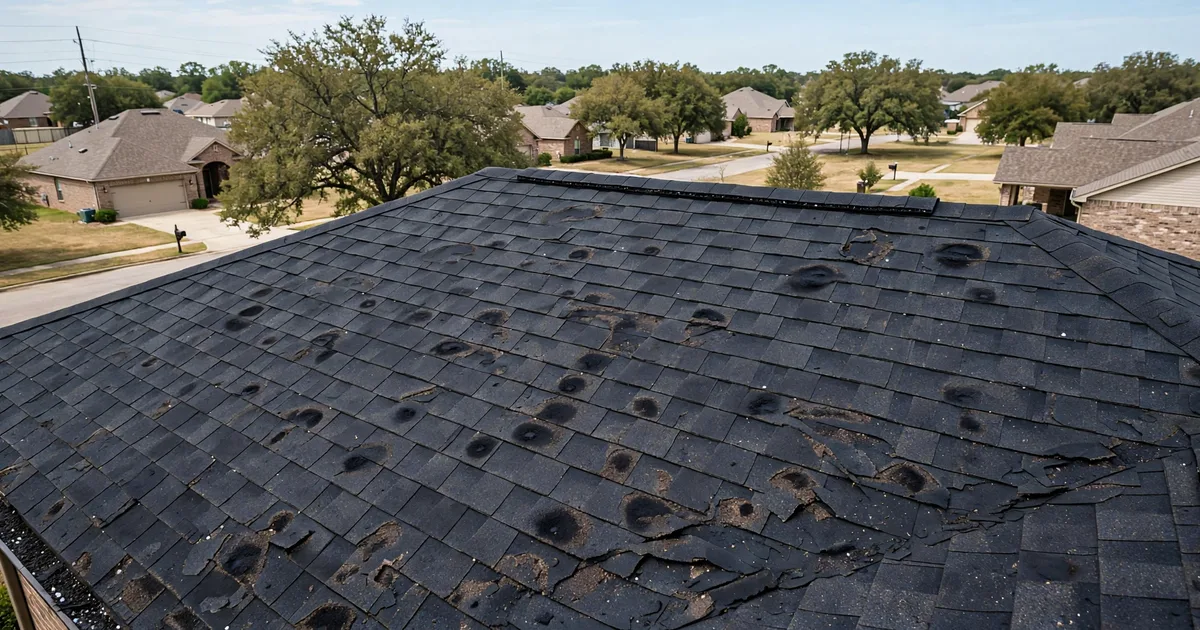
Hail damage on shingles looks like dark bruises where granules are gone, soft spots that dent under thumb pressure, and cracked or split shingles. Fresh bruises feel soft. Old wear feels hard. That difference tells an adjuster which storm caused the damage.
A bruise is a soft impact spot where the mat is crushed but the shingle stays attached. Granule loss is the missing sand-like coating that exposes black asphalt underneath. Bruises cluster on the slope facing the storm. Random granule loss across all slopes points to age, not hail.
Hail 1 inch wide (quarter size) bruises shingles and dents metal flashing. Hail 1.75 inches wide (golf ball size) cracks shingles and breaks skylights. According to Verisk (2025), 16 states saw severe hail impact more than 20 percent of roofs in 2025, up from 12 states in 2024. Texas sits in the highest exposure band every year.
Check the collateral damage too. Dented gutters, downspouts, window screens, and AC fins confirm hail size and direction. Adjusters trust collateral damage because homeowners cannot fake a dented downspout.
Hail size shorthand helps every conversation with adjusters and roofers. Pea size is 0.25 inch. Quarter size is 1 inch. Golf ball size is 1.75 inches. Tennis ball size is 2.5 inches. Damage to shingles starts at quarter size; damage to skylights and vents starts smaller.
Run a hand lightly over suspect shingles. Fresh bruises feel like soft dents in an otherwise firm surface. Old blisters feel hard and raised. The thumb test separates hail bruises from manufacturing blisters in seconds.
Call now and speak to a roofing specialist about your roof.
On metal roofs, hail leaves round dents in panels and trim; on tile roofs, it cracks tiles and chips the glaze. Each material fails in its own way, and carriers judge each by different standards.
Glaze is the baked coating that seals a clay or concrete tile. Chipped glaze exposes porous tile to water. Cracked tiles leak at the first rain. Metal dents are often cosmetic, but deep dents at seams and fasteners break the weather seal. Standing seam panels dent less than exposed fastener panels because the ribs add rigidity.
Soft metals tell the story fastest. Check vent caps, flashing, and drip edge for round dents. Dents in soft metal prove hail size even when the shingles hide their bruises. Photograph every dented component with a ruler for scale.
Tile underlayment ages invisibly. Cracked tiles get replaced, but the felt or synthetic underlayment beneath old tile may be brittle. A tile roof with 30 percent broken tiles often needs underlayment work too, which changes the repair scope significantly.
Ridge caps take hail first. The caps sit at the roof peak with no deck support directly beneath, so impacts crack them before field shingles show damage. Check the caps on every hail inspection, even when the slopes look clean.
Most Texas policies allow 1 year from the storm date to file, but filing within 30 days protects the claim. Fast filing ties the damage to a specific storm with fresh evidence. Slow filing invites disputes about which storm caused what.
According to Verisk (2025), non-catastrophic wind and hail roof claims rose from 17 percent to 25 percent of all residential claims between 2022 and 2024. Everyday storms now drive a quarter of claim volume. Filing quickly puts your claim ahead of the backlog that follows every hail season.
A second storm before the first claim closes complicates everything. Document each storm separately with its own photos and dates. Carriers assign separate claim numbers per storm date. Mixed documentation lets the carrier attribute all damage to the older, possibly expired event.
Storms fade from memory and roofs weather further with each rain. Call (619) 775-3787 for fast local help documenting hail damage before the evidence washes away.
The process runs: document damage, file the claim, meet the adjuster, review the scope, and schedule repairs after approval. Each step builds the file the next step needs.
Settlements split into two checks on replacement cost policies. The first check covers actual cash value minus the deductible. The second check releases the recoverable depreciation after the work finishes and the carrier receives the final invoice. Our Texas roof insurance claim guide walks through documentation and deadlines in full detail.
Supplements handle missed items. When the roofer finds damaged decking or code-required upgrades during the work, the roofer submits a supplement with photos. The carrier reviews and issues additional payment. Most hail jobs include at least one supplement; it is a normal part of the process.
Call a roofer within 48 hours of the storm for documentation and temporary protection, before the adjuster visit. The roofer documents damage while it is fresh and tarps any openings. The adjuster arrives days later and works from that documentation.
A roofer at the adjuster meeting points out bruises the adjuster might miss and challenges low hit counts with marked test squares. That presence routinely changes outcomes on borderline slopes. When hail totals the roof, the roof replacement cost guide shows reported ranges to compare against the settlement.
Storm chasers follow every hail event into Houston neighborhoods. Out-of-state plates, door-to-door offers, and demands to sign before an inspection are the warning signs. A local roofer with a physical Houston address stays reachable after the work is done and the claim is closed.
Keep a storm file for the property. Note each hail date, the hail size you observed, and the photos you took. When the next storm hits, that file proves the roof's condition between events and speeds every future claim.
Hail damage roof signs are easy to miss and expensive to ignore. A hail damaged roof needs dated photos, a proper Texas hail insurance claim, and a roofer at the adjuster meeting. Call now at (619) 775-3787 for fast local help.
Yes. One-inch hail, roughly quarter size, bruises shingles and dents flashing. Smaller hail still damages soft metals like vents and gutters. Damage depends on hail size, wind speed, and shingle age together.
Yes. Bruises show only on close inspection of the shingle surface. From the ground, a hail damaged roof often looks completely normal. That is why carriers send adjusters onto the roof instead of judging from the street.
Insurance replaces the slopes where hail hits meet the carrier's damage threshold, not automatically the whole roof. When every slope meets the threshold, the settlement covers full replacement. Matching laws in some policies extend coverage to undamaged slopes.
NOAA storm reports date and locate each hail event by address. Dated photos of fresh damage tie your roof to that event. Neighbor claims from the same storm date strengthen the file further.
Step-by-step filing guide for Texas roof claims, with deadlines and deductible math.
Professional inspections document hail damage before the adjuster arrives.
Wind often hits with hail. Check the companion guide for wind damage signs.