roof leak repair services
Local leak diagnosis and repair across the Houston metro.
A brown stain on the ceiling raises one question fast: is the roof leaking? This guide covers the water stain ceiling Houston homeowners find after storms, how to tell a ceiling water stain roof leak from plumbing, and what to do next. Water stain ceiling, ceiling water stain roof leak, roof leak signs Houston: call now at (619) 775-3787 for fast help.
Speak to a roofing specialist (619) 775-3787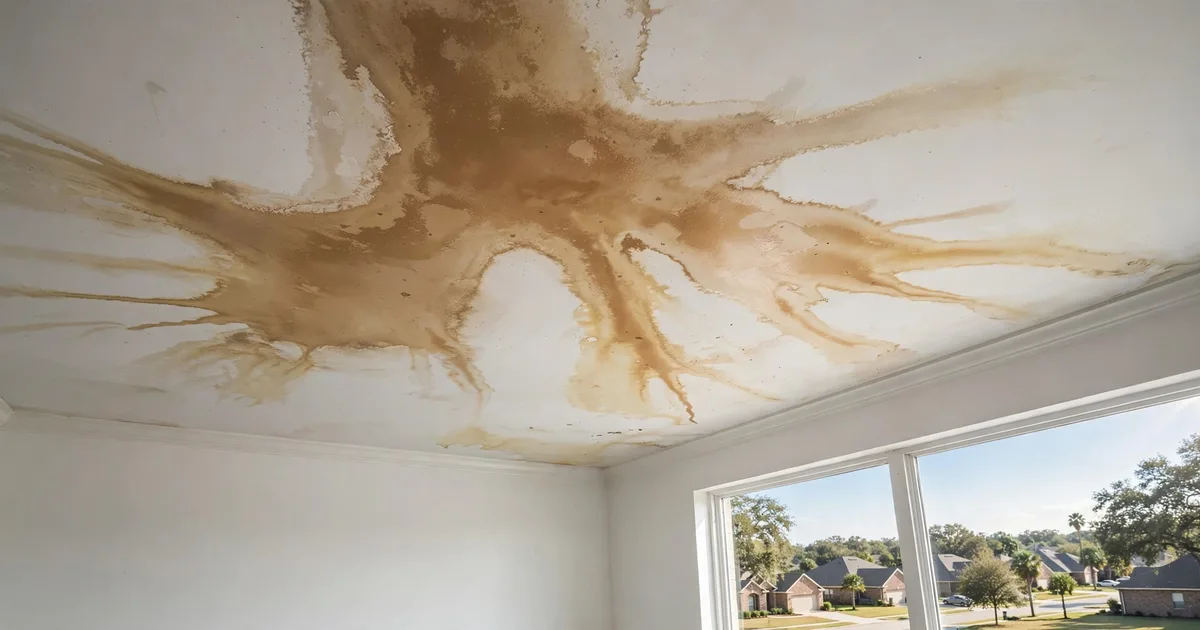
A ceiling water stain means water has breached the roof or a plumbing line and pooled inside the ceiling drywall. A water stain is the brown or yellow ring left behind when wet drywall dries. The color comes from minerals and tannins in the water and the drywall paper. The ring marks the high-water line of the wet area.
Stains grow in stages. A small yellow spot appears first. The spot darkens to brown as more water arrives. The ring widens after each rain. By the time the stain is visible from across the room, water has been entering for weeks or months. The drywall above the stain holds far more water than the stain shows.
Stains are symptoms, not problems. Painting over the stain hides the symptom. The water keeps entering. Houston averages about 50 inches of rain a year (NOAA climate normals), so every storm feeds the leak. The only fix is finding and stopping the water source.
Call now and speak to a roofing specialist about your roof.
A stain points to the roof when it grows during rain; it points to plumbing when it grows during dry weather. The timing test separates the two sources without any tools. Watch the stain through one rain cycle and one dry stretch.
The roof test runs in three steps. First, mark the stain outline with a pencil and note the date. Second, check the outline after the next rain. A wider ring after rain means roof water. Third, check the outline after 5 dry days. Growth without rain means plumbing. Run every faucet and flush every toilet during the dry stretch to stress the plumbing.
The attic check confirms it. A flashlight reveals the water trail on the rafters above the stain. Roof leaks leave trails that run downhill from a penetration or a damaged slope. Plumbing leaks drip straight down from a pipe joint. The trail tells the source.
Ceiling stains appear downhill and often feet away from the actual roof breach because water follows rafters, decking, and vapor barriers. Water rarely drops straight through the roof. It enters at a breach, runs along the underside of the decking, follows a rafter downhill, and drips off at the lowest point it reaches.
The offset runs 2 to 10 feet in most cases. A stain in a hallway can trace back to a vent boot in the bathroom roof above. A stain near an exterior wall can trace back to step flashing 6 feet uphill. That is why patching the roof directly above the stain usually misses. The repair belongs at the entry point, not the drip point.
Vapor barriers complicate the path. Water that hits a polyethylene barrier spreads sideways before it finds a seam. Insulation wicks water outward from the entry point. The visible stain marks where the water finally won, not where it entered. Tracing the stain uphill through the attic is the only reliable way to find the breach.
Right after spotting a stain, you mark its outline, contain the drip, photograph the damage, and schedule a roof inspection. Each step protects the house and the insurance claim.
Do not press on a bulging ceiling. Bulging means pooled water above the drywall. Call (619) 775-3787 to get the leak traced and stopped.
A ceiling stain cannot wait through another heavy rain because trapped water feeds mold and rots framing. According to the EPA, mold can begin growing on damp surfaces within 24 to 48 hours. The stain on the ceiling is the last sign to appear. The mold starts inside the ceiling cavity, where nobody sees it.
Wood framing rots on a slower clock. Weeks of wet conditions soften the rafters and the decking around the leak. Months of wet conditions destroy them. The repair grows from a $300 boot replacement to a $2,000 decking and framing job. The timeline depends on the leak rate, but the direction never changes: water left alone always costs more.
Insulation loses its R-value when wet. Wet fiberglass compresses and stops insulating. The attic above the stain grows hotter in summer and colder in winter. Energy bills rise. The stain on the ceiling is the visible tip of a stack of hidden costs.
A roofer traces a stain to its source with an attic inspection that follows the water trail uphill to the entry point. The trail runs from the stain toward the roof breach. Dark streaks on the rafters, stained decking, and wet insulation mark the path.
The inspection uses three tools. A flashlight reveals the trail. A moisture meter measures how wet the wood is and maps the wet zone. A hose test confirms the entry point: water runs over one suspect area at a time until the drip appears inside. The test starts at the lowest suspect and moves uphill.
Common sources sit at roof penetrations. Vent boots, chimney flashing, skylight curbs, and pipe jacks cause most ceiling stains. Field shingle damage causes the rest. The diagnosis names the source before any repair starts, so the fix lands on the entry point instead of the drip point.
Fixing the cause of a ceiling stain costs $150 to $800 in reported ranges when the source is a vent boot, flashing, or a small shingle patch. Vent boot replacement sits at $150 to $350. Flashing repair sits at $200 to $600. Small shingle patches sit at $150 to $400. The reported roof repair cost ranges in Houston break every tier down.
The ceiling repair adds a second ticket. A stained ceiling panel costs a few hundred dollars to cut out, replace, texture, and paint. The drywall must dry fully before the work starts, which takes 2 to 4 weeks after the roof is fixed. Painting a wet ceiling traps moisture and guarantees the stain returns.
Water stain ceiling, ceiling water stain roof leak, roof leak signs Houston: call now at (619) 775-3787 for fast help. Stop the water first. Fix the ceiling second.
Yes. Paint seals the stain but not the leak. Water keeps entering above the paint. The stain bleeds through within months. Fix the roof first, let the ceiling dry for 2 to 4 weeks, then prime with a stain-blocking primer and repaint.
A flat stain is cosmetic. A bulging or sagging ceiling is not. Bulging means water has pooled above the drywall and the panel may collapse. Keep people and furniture clear of the area. Poke a small drain hole in the bulge with a screwdriver to relieve the water, with a bucket below.
Yes, when the ceiling bulges. A bulge means pooled water. A small hole at the lowest point drains the water in a controlled way and prevents a sudden collapse. Wear eye protection. Expect dirty water. The ceiling still needs replacement after it dries.
Sometimes. Sudden storm damage to the roof often qualifies, and the resulting interior stain falls under the claim. The stain alone, without covered roof damage, does not qualify. Wear and age never qualify. The adjuster inspects the roof, not just the ceiling.
Local leak diagnosis and repair across the Houston metro.
The most common small cause of slow ceiling stains.
How Texas homeowners file wind and hail roof claims.