Call
Describe the location, visible signs and whether water is actively entering.
Water is entering your home. Houston storm damage roof problems and hail damage spread fast, and every hour adds repair cost. A roof tarp buys time until a contractor arrives. For emergency roof repair Houston help, call now at (619) 775-3787 and reach a local contractor today.
Speak to a roofing specialist (619) 775-3787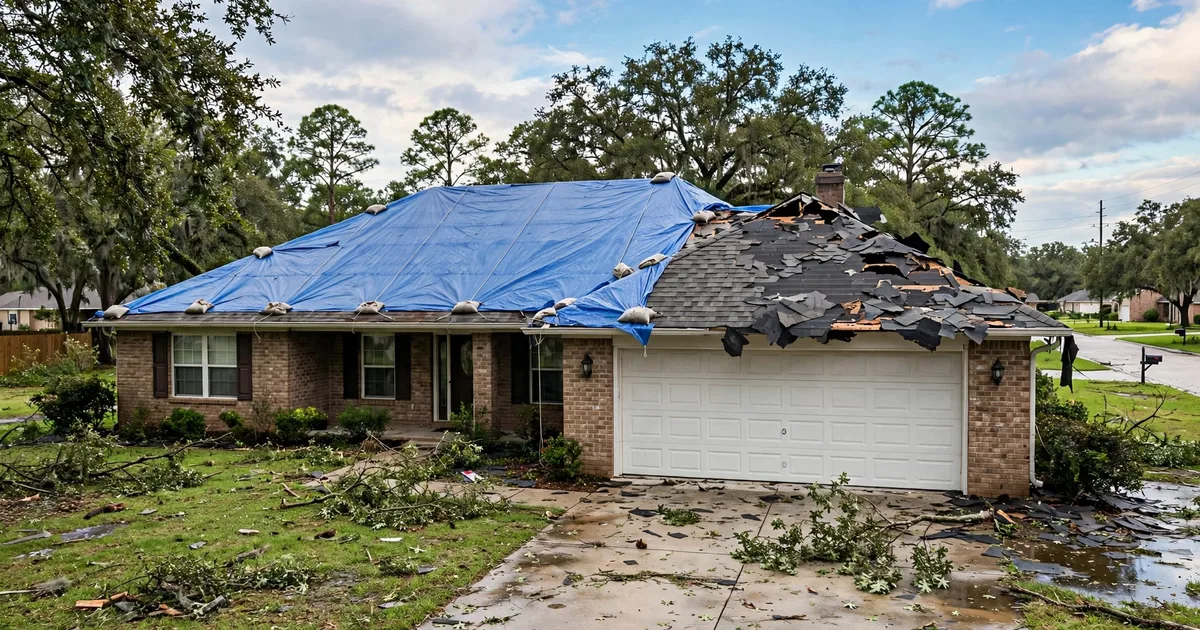
Call (619) 775-3787 right now to reach a Houston roofing contractor for emergency roof repair Houston service. My Houston Roofer connects Houston homeowners directly by phone to local roofing contractors who handle emergencies. No forms. No waiting for an email. You call, a contractor answers, and help is dispatched to your address.
Houston storms move fast. A tropical system can tear through the Heights, Katy, Sugar Land, and Pasadena inside a single afternoon, and damage discovered at sunset becomes a flooded attic by midnight. Contractors in our network respond to emergencies across Greater Houston 7 days a week, including evenings, weekends, and holidays, and every Houston roofing contractor in the network answers emergency calls directly.
Expect a direct line, not a call center. Contractors in the network cover the full metro, from Cypress and The Woodlands down to Pearland, Missouri City, and Baytown. After major hurricanes or tropical storms, every contractor in Houston runs at full capacity, and same-day slots go to callers first. Calling now locks in your position before the next band of rain arrives.
When you call, describe what you see: water entering the house, missing shingles, a fallen limb, or a sagging ceiling. The contractor schedules the fastest available crew and tells you exactly what to do while you wait. Emergency tarping in Houston typically runs $300 to $700 depending on roof height, access, and tarp size. Larger storm damage repairs run higher based on the damaged area. Call (619) 775-3787 now for exact pricing on your situation.
Tropical storms and hurricanes create combination emergencies. High wind tears shingles while hours of rain push water under the remaining ones, and falling limbs puncture whatever the wind left intact. That combination is why post-storm callers ask for a full-roof check, not just a patch on the visible hole. A full-roof check during the same visit adds little to the bill and catches damage the first rain would find anyway.
Visible water signs point to a roof path that needs inspection.
A roofing emergency is any damage that lets water into your home or leaves the structure exposed to the next rain. Everything else can wait for a scheduled appointment. Emergencies cannot.
Four conditions qualify as emergencies:
A stain on a ceiling with no active drip is urgent but not an emergency unless rain is forecast within 24 hours. Houston weather changes hourly, so treat any fresh stain found during storm season as time-sensitive. Damage that looks minor from the ground often hides lifted shingles or cracked seals that the next storm exploits. Unsure whether your situation qualifies? Call (619) 775-3787 and describe it; a standard roof repair appointment covers anything that is not an emergency.
Houston's mature tree canopy makes limb damage common. Live oaks, pecans, and pines drop heavy limbs across the Heights, Montrose, River Oaks, and the older suburbs during tropical storms and straight-line wind events. A limb the width of your arm carries enough force to puncture decking and split rafters. Never touch a limb that rests on power lines; call 911 first, then call (619) 775-3787 for the roof.
Your job before the roofer arrives is safety first, then water containment, then damage documentation. Take 15 focused minutes on these three tasks.
First, protect your household:
Second, contain the water:
Third, document everything for your insurance claim:
Skip the common mistakes. Do not nail down loose shingles yourself; temporary nailing hides the original damage pattern your adjuster needs to see. Do not throw away damaged materials or debris; insurers photograph debris fields as evidence. Do not sign any document a door-knocking contractor hands you before you call (619) 775-3787 and compare. Storm chasers canvass Houston neighborhoods after every major event, and a signed contingency agreement can lock you into their terms.
Do not climb onto the roof to inspect or tarp it yourself. Falls are the leading cause of homeowner roofing injuries, and an insurer may dispute a claim when amateur repairs alter the damage. Note the time the damage started and the storm that caused it. Read the guide to filing a roof insurance claim in Texas after the crew arrives.
Storm damage roof repair in Houston follows four steps: emergency tarping, professional assessment, insurance documentation, and repair or replacement. Every legitimate contractor runs the same sequence.
| Step | What happens | Typical timing |
|---|---|---|
| 1. Tarping | The crew secures a heavy-duty tarp over the damaged area, fastened to undamaged roof sections | Same visit, usually within hours of your call |
| 2. Assessment | A full inspection of shingles, flashing, decking, and attic for hidden damage | Within 1 to 3 days |
| 3. Insurance documentation | Photos, measurements, and a written scope of work formatted for your adjuster | Before the adjuster visit |
| 4. Repair or replacement | Permanent fix scoped to the documented damage | After claim approval or your go-ahead |
Tarping is the priority. A standard emergency roof tarp covers about 400 square feet, equal to 4 roofing squares (1 square equals 100 square feet). Larger breaches take multiple tarps or a reinforced tarp system anchored at the ridge. Tarping stops active water entry the same day and protects the home while the claim moves forward.
Houston storms cause more than wind damage. NOAA's National Hurricane Center reported that Hurricane Harvey (2017) produced more than 51 inches of rain near Cedar Bayou, Texas, the heaviest rainfall ever recorded from a U.S. tropical cyclone. That volume overwhelms gutters, backs water under shingles, and finds every weak seal on the roof. Tropical systems also combine wind, rain, and flying debris in one event, which is why a post-storm storm damage inspection checks the entire roof system, not just the obvious holes.
Meet the adjuster with the contractor present when possible. Contractors speak the same language as adjusters: squares, slopes, line items. They point out bruised shingles, lifted flashing, and decking damage the adjuster might walk past. Adjuster visits in Houston typically happen 3 to 10 days after you file. Keep every receipt for tarps, buckets, and hotel stays; insurers reimburse reasonable emergency mitigation costs under most Texas policies.
Permanent repairs start after the assessment. Small punctures and lifted shingle sections get repaired in one visit. Widespread damage across multiple roof slopes usually points toward partial or full replacement. Repair scope depends on roof age, material, and the adjuster's findings. Emergency tarping costs $300 to $700 in Houston; permanent repairs range from $500 for small fixes to $8,000 or more for major storm work. Every price varies with roof size, pitch, and material. Call (619) 775-3787 now for exact pricing on your roof.
Hail damage is the bruising, cracking, and granule loss that hailstones inflict on roofing materials. It differs from wind damage because it often shows no missing shingles and no active leak.
Know the three visible signs:
Hail damage matters for insurance even when the roof is not leaking. Bruised shingles lose granules faster, crack under Houston summer heat, and fail years before their rated lifespan. Insurers in Texas recognize hail as a covered peril on standard homeowner policies, but they require prompt notice after the event. Photograph the damage the day you find it and call your insurer the same week.
Houston hail hits hardest in spring. Supercell storms from March through June drop the largest stones of the year, and a single 15-minute hail event bruises thousands of roofs inside one zip code. Older roofs suffer more: a 15-year-old shingle sheds granules faster than a 5-year-old one under the same stones. Note the date and time of every hail event you witness; adjusters ask for it.
A professional inspection settles the question. Adjusters trust documented impact patterns across multiple slopes, not a single dent. Read the hail damage signs and insurance guide before your adjuster visit so you know what the inspector looks for. Widespread bruising across 8 to 10 roofing squares (800 to 1,000 square feet) moves the right answer from repair toward replacement. Call (619) 775-3787 to get a local contractor on site.
The short answers are below. For emergency roof repair Houston callers: call now at (619) 775-3787, a roof tarp stops water while you wait, storm damage roof repairs start with tarping and assessment, and hail damage gets photographed and documented for your insurer the same day.
Bottom line for every emergency roof repair Houston situation: stop the water first with a roof tarp, document the storm damage roof evidence, and route hail damage claims through a proper inspection. Call now at (619) 775-3787 and a Houston roofing contractor takes it from there. Document every call and keep all receipts until the claim closes.
Emergency crews in the Houston network typically arrive the same day, often within 2 to 4 hours of your call depending on your neighborhood and current storm volume. After major hurricanes or hailstorms, demand spikes across Harris County and surrounding areas, so call (619) 775-3787 immediately to hold your place in the dispatch queue.
Yes. Tarping is the standard first step for any emergency with active water entry or exposed decking. The crew secures a heavy-duty tarp over the damaged area during the first visit, which stops further water damage while the assessment and insurance process run. Tarping in Houston typically costs $300 to $700 depending on roof height, access, and the size of the damaged area. Call (619) 775-3787 now for exact pricing.
Yes. Contractors document damage with photos, measurements, and a written scope of work formatted for insurance adjusters. They meet the adjuster on site when scheduling allows and provide the evidence adjusters need to approve the claim. You still file the claim yourself with your insurer, but the documentation package makes the process faster. Call (619) 775-3787 to get a contractor started on your documentation.
Call anyway. Crews work between storm bands when conditions allow safe ladder access, and they can often tarp a roof in a break in the rain. Lightning or extreme wind can force the crew to wait; the contractor then schedules the earliest safe window and tells you how to contain water inside the home meanwhile. Do not wait for clear skies to call (619) 775-3787, because dispatch queues fill during every storm.
The roofing connection process moves from a direct call to a local contractor conversation and then an independent assessment.
Describe the location, visible signs and whether water is actively entering.
Speak with a roofing specialist serving your Houston-area location.
The independent contractor explains the inspection and repair path.
The cost guide separates repair scope, replacement scope and the factors that change a contractor's assessment.
Non-emergency repairs for leaks, worn shingles, and flashing problems on Houston homes.
Step-by-step guide for Houston homeowners dealing with wind-torn shingles.
How to spot hail damage and document it for a Texas insurance claim.