Roof replacement cost in Houston
Reported cost ranges for a full replacement, so you can compare repair quotes.
Roof replacement signs are easy to miss until the damage spreads. This guide covers the 7 signs your roof needs replacement: age, curling shingles, bald spots, granule loss, repeat leaks, daylight in the attic, and a sagging deck. It also gives a framework to decide whether to repair or replace the roof with confidence. Compare every sign against your roof lifespan. Call now at (619) 775-3787 for guidance.
Speak to a roofing specialist (619) 775-3787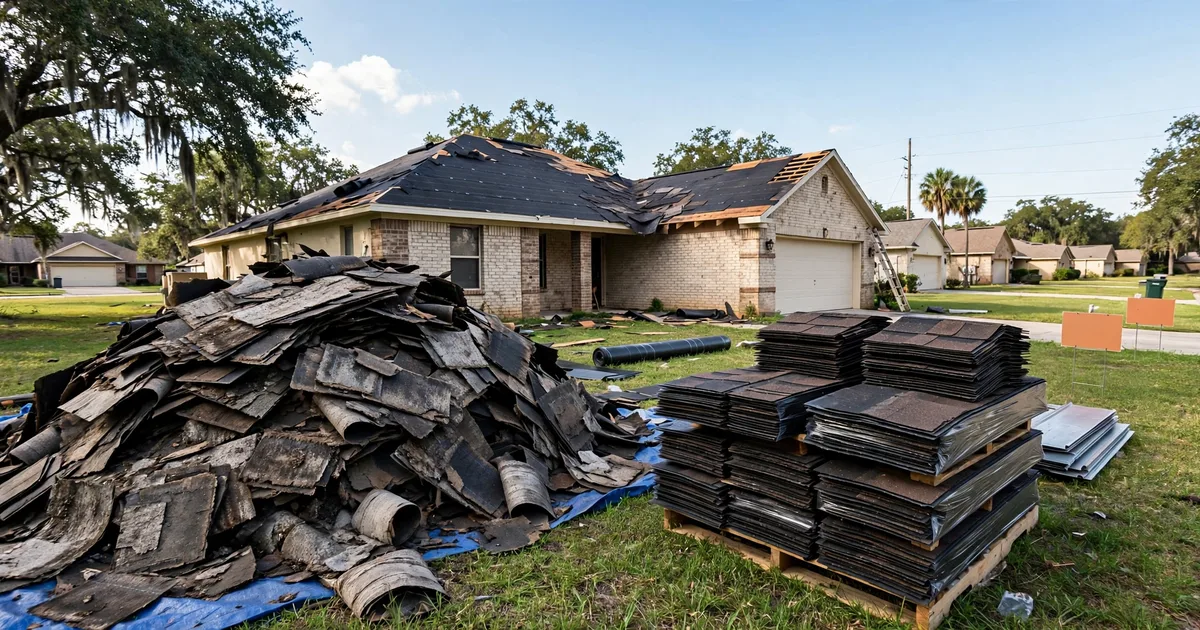
A roof is too old at 20 to 25 years for 3-tab shingles, 25 to 30 years for architectural shingles, and 40 to 70 years for metal. Age is the first of the roof replacement signs because every other sign accelerates past these marks.
Roof lifespan varies by material and climate. In Houston heat, 3-tab shingles last 15 to 20 years, architectural shingles last 20 to 30 years, metal lasts 40 to 70 years, and tile lasts 50 or more years. Architectural shingles are thicker laminated shingles with a dimensional profile. They outlast 3-tab shingles by 5 to 10 years in the same climate.
Houston heat shortens every roof lifespan on this list. Shingle temperatures reach 150 to 170 degrees in August. That heat bakes the asphalt and dries the sealant strips years ahead of cooler climates. When age passes the marks above, roof replacement services in Houston give straighter answers than another round of patching.
Warranties track these lifespans loosely. Shingle manufacturers publish 25-year to lifetime warranties, but the fine print prorates coverage and excludes labor after the first 10 years. A 22-year-old shingle under a 30-year warranty has limited coverage left. Read the warranty before counting on it.
Check the installation date on your closing documents or the building permit. Guessing the roof's age from its looks adds years of error; paperwork gives the real number for the 75 percent calculation.
Call now and speak to a roofing specialist about your roof.
Curling and cupping mean the shingles have lost their seal and flexibility, and the roof is near the end of its service life. Both shapes break the shingle's wind and water seal. Rain then runs under the tabs instead of over them.
Curling is upward turning of shingle edges. Cupping is a concave dip across the shingle tab. Thermal cycling is the daily expansion and contraction from heat that drives both shapes. Houston's 40-degree day-night swings in shoulder seasons work every shingle loose over time.
Wind lifts curled shingles first. Once 10 or more shingles curl across multiple slopes, spot replacement stops working because the surrounding shingles are equally brittle. Brittle shingles crack during repair, turning a 10-shingle job into a 40-shingle job.
Nail pops ride along with curling. A nail pop is a fastener that has worked its way up through the shingle surface. Popped nails lift the shingle above and break its seal. Crews reset popped nails and reseal the shingle during maintenance visits, but widespread pops signal deck movement and age.
Bald spots signal that UV protection is gone and the asphalt mat is aging fast. Granules are the roof's sunscreen. Without them, UV cooks the asphalt in months, not years.
Granules are the ceramic-coated mineral coating that blocks UV from the asphalt mat. Check the gutters for evidence. A handful of granules after a storm is normal. Cups of granules after every rain mean the coating is shedding across the whole field. Dark patches on the shingles mark the bald spots themselves.
Bald shingles blister next. Blisters pop and leave pinholes. Pinholes leak. The chain from bald spot to active leak runs 1 to 3 years in Houston sun, so bald spots are a replacement signal with a countdown attached.
Algae streaks are cosmetic; moss is not. Black algae streaks stain shingles without shortening their life. Moss holds moisture against the surface and lifts shingle edges. Zinc strips near the ridge discourage both, but established moss needs professional removal to avoid shingle damage.
Repeat leaks point to replacement when new leaks appear in different areas within 12 months of a repair. One leak is a repair. A pattern of leaks is a failing system.
Track every leak with a date and location. Two or more leaks in 12 months across different slopes mean the waterproofing is failing everywhere, not in one spot. Patching each new leak costs $300 to $800 per visit in reported ranges, and the visits keep coming. Houston roof repair services fix isolated leaks well; patterns across slopes tell a different story.
Ceiling stains map the leak history. Brown rings mark old leaks; dark wet spots mark active ones. Multiple rings in different rooms confirm the pattern of system-wide failure. Photograph each stain with the date for the roofer and the insurance file.
Chasing leaks one patch at a time costs more than a new roof within 2 to 3 years. Call (619) 775-3787 for guidance on whether to repair or replace your roof.
Daylight in the attic means holes or gaps in the roof deck that admit water with every rain. This is one of the clearest roof replacement signs because it shows the failure goes past the shingles into the structure.
Visit the attic on a bright day and turn off the lights. Pinholes show as bright dots. Larger gaps show as slits along flashing lines and vents. Distinguish vent and fixture light from actual holes: vents have frames, holes do not. Mark each hole's position from inside so the roofer finds it fast from above.
Water follows the holes. Stained decking around a daylight hole means the leak is active. Clean decking around a new hole means you caught it early. Either way, holes in the deck push the decision toward replacement.
A sagging roof deck means structural damage from long-term moisture, and it needs immediate professional attention. Sagging is the most serious of the roof replacement signs. It signals that the decking or framing is failing.
Causes include saturated plywood decking, rotted rafters, and undersized framing that finally gave way. A sag deeper than 1 inch across a 4-foot span needs a structural look before any roofing work. Water weight from ponding adds hundreds of pounds per square and accelerates the sag.
Stay off a sagging roof. Foot traffic on weakened decking risks a fall-through. Call a roofer the same day you spot a sag, and keep everyone clear of the area below it until it is evaluated.
Engineered truss roofs sag less visibly than rafter roofs, so check the ridge line from the street for dips.
Replace when the roof is past 75 percent of its lifespan with widespread issues; repair when damage is isolated and the roof is young. The framework below turns the 7 signs into a decision.
According to Angi's cost guide (updated August 2026), the national average roof repair costs about $1,100, with most projects between $380 and $1,800. When repair quotes climb past 30 to 40 percent of a replacement quote, the math favors replacement. Check the numbers against the roof replacement cost guide for Houston before deciding.
Get 3 written quotes before deciding. Each quote should list the squares involved (1 square equals 100 square feet), the shingle type, underlayment, and warranty terms. Comparable line items make the 30 to 40 percent comparison honest.
Timing affects pricing and scheduling. Roofers book out 3 to 6 weeks in spring and fall, the busiest seasons. Houston's mild winters keep crews working year-round, so winter scheduling sometimes shortens the wait.
These roof replacement signs point to one decision: repair or replace. Compare the roof's age against its roof lifespan, count the problem areas, and call now at (619) 775-3787 for guidance on what to do next.
Most homes take 1 to 3 days. A 15 to 25 square roof (1,500 to 2,500 square feet) with one layer of shingles finishes in 1 to 2 days. Steep roofs, multiple layers, and deck repairs add days.
Yes, when the other slopes stay healthy. Partial replacement works for isolated storm damage on a young roof. Matching shingle color and weathering on the remaining slopes is the main drawback.
A new roof removes a major negotiation obstacle at sale and improves curb appeal. Buyers and inspectors flag old roofs first. A documented new roof with warranty paperwork answers those questions before they arise.
Crews tear off the old shingles, inspect the deck, replace damaged decking, and haul the debris away. Most jobs recycle the shingles through local processors. The contract should state who handles disposal and deck repair pricing.
Reported cost ranges for a full replacement, so you can compare repair quotes.
Run the seasonal checklist to catch replacement signs early.
Isolated damage on a young roof? Repair is usually the right call.