Call
Describe the location, visible signs and whether water is actively entering.
Planning a roof replacement in Houston means Gulf Coast heat, hurricanes, and hail. Homeowners scheduling a roof replacement Houston roofing contractors perform need facts on signs, materials, timelines, and costs. This guide covers when to replace a roof, what reroofing includes, and what a new roof Houston homeowners trust runs. Call now at (619) 775-3787 to reach a roofing contractor.
Speak to a roofing specialist (619) 775-3787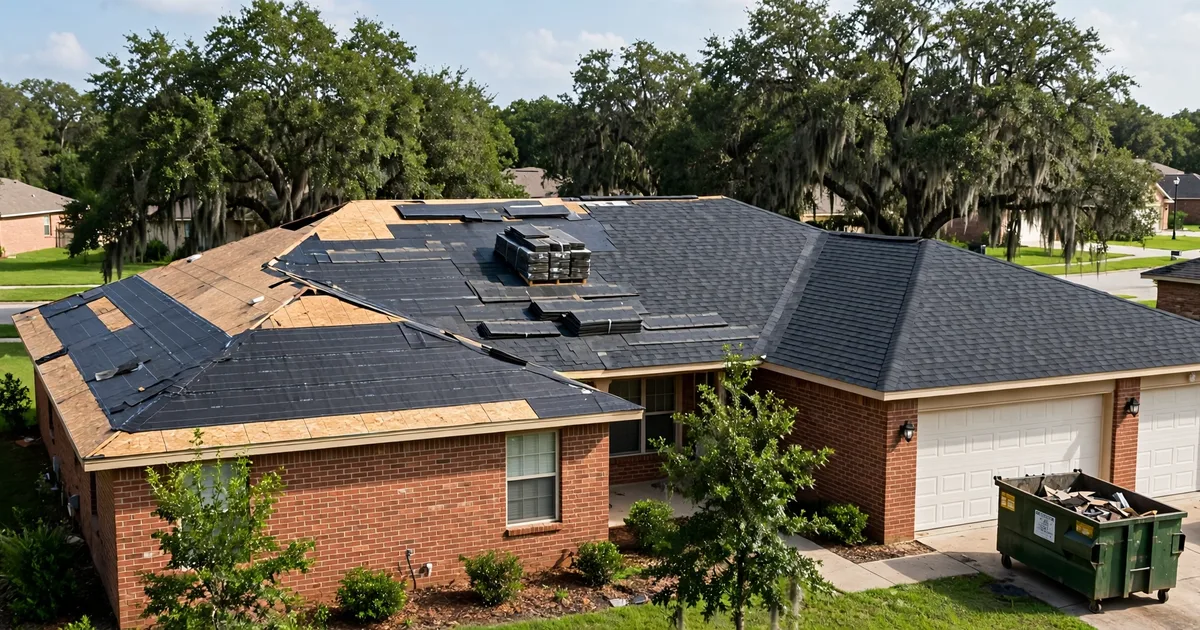
A Houston homeowner needs a new roof when shingle age passes 20 years, damage spreads across slopes, and leaks return after repairs. Houston roofs age faster than roofs in mild climates. Summer heat tops 100 degrees for weeks at a time. UV rays bake shingles from April through October. Humidity feeds algae growth and wood rot. Hurricanes and hailstorms strike the metro almost every year. A roof replacement Houston homeowners schedule near the 20-year mark often becomes urgent sooner.
Start with roof age. Check closing papers or the original home inspection report. The National Roofing Contractors Association lists 20 to 30 years as the expected service life of asphalt shingle roofs. Houston heat pushes many roofs toward the low end of that range. Neighborhoods with 1970s and 1980s housing stock, like Meyerland, Sharpstown, and parts of Pasadena, now sit deep into replacement territory.
Next, watch performance. One leak after a storm points to a repair. Three leaks in two years point to replacement. Rising summer electric bills hint at failing ventilation or compressed insulation under the deck. A Houston roofing contractor reads these signals during an on-roof inspection and gives a straight verdict.
A proper inspection covers the full system. The contractor checks shingle condition, flashing, valleys, vents, and the attic underside. Attic checks reveal leaks that exterior views miss. Stained decking, damp insulation, and daylight gaps all show from below. Most inspections take 30 to 60 minutes. Ask for photos of every problem area.
Do not wait for daylight to show through the boards. Water damage spreads inside walls and ceilings months before stains appear. An inspection costs little compared with a rotted deck. Call now at (619) 775-3787 to schedule one.
Visible water signs point to a roof path that needs inspection.
Replacement is the right call when damage covers large areas, the roof is past 20 years, or leaks keep returning. Houston weather creates every warning sign faster than normal aging. Granules wash into gutters after each hailstorm. Decking softens under years of attic humidity. Flashing lifts in hurricane wind bands. Watch for these six signs:
Check the attic too. Water stains on decking mark old leaks. Mold on rafters signals trapped moisture. Wet insulation loses its R-value fast. These interior signs confirm what the exterior shows.
Severe weather drives most Houston replacements. The National Weather Service recorded 51.88 inches of rain at Cedar Bayou during Hurricane Harvey in 2017, the heaviest storm rainfall total in Houston-area records (NOAA service assessment, 2018). Roofs across Harris County took wind, water, and debris hits in the same week. Damage from that one season still surfaces as leaks today.
Small, isolated damage still calls for roof repair when replacement is not needed. One lifted shingle or one bad flashing joint rarely justifies a full tear-off. The line sits at scope. Single-spot problems get repairs. Multi-slope problems get replacement.
A full roof replacement is the complete removal of old roofing, followed by deck inspection, new underlayment, new shingles, new flashing, upgraded ventilation, and full cleanup. Confirm replacement is truly needed before teardown day. Every step below happens on a proper job:
Deck repairs add time and cost. Most crews charge per sheet of replaced plywood. Rotten sections get cut out and reframed the same day. Full redecking of a 20-square (2,000-square-foot) roof adds one extra day. Your contractor flags soft spots during the estimate, not as a surprise on teardown day.
Expect noise, vibration, and crew traffic for the full work window. Move patio furniture and cover attic valuables before day one. Pets stay indoors away from the work zone. A good crew protects landscaping with tarps and leaves the yard cleaner than they found it. Still unsure whether repair or replacement fits? Read our guide on how to tell if a roof needs replacement.
Houston homeowners choose most often between architectural shingles, metal roofing, clay or concrete tile, and impact-resistant shingles. Heat, humidity, hurricanes, and hail shape the choice. Compare the main options:
| Material | Typical lifespan | Houston fit |
|---|---|---|
| Architectural asphalt shingles | 20 to 30 years | Most common choice. Affordable. Wide color range. Needs strong attic ventilation in Houston heat. |
| Metal standing seam | 40 to 70 years | Sheds Gulf downpours fast. Reflects heat. Holds strong in high wind zones. |
| Clay or concrete tile | 50 years or more | Resists heat and rot. Heavy weight needs a structural check before install. |
| Impact-resistant shingles (Class 4) | 25 to 35 years | Tested under UL 2218 against hail strikes. Several Texas insurers discount premiums for Class 4 roofs. |
Underlayment and ventilation matter as much as shingles. Synthetic underlayment resists tearing in high wind. Peel-and-stick membrane seals valleys and eaves against wind-driven rain. Ridge vents paired with soffit vents move hot air out of the attic. Good airflow adds years to shingle life in Houston heat.
Color matters in Houston. Lighter shingles reflect solar heat and trim cooling loads. Dark roofs run hotter and age faster under Texas UV. Algae-resistant shingles fight the black streaks that humidity brings to north-facing slopes.
Hail drives many material upgrades. Spring hailstorms dent vents, crack shingles, and bruise mats across Katy, Cypress, and The Woodlands every few years. Class 4 shingles carry the highest impact rating in the roofing industry. For maximum lifespan, consider metal roofing as a replacement option. Metal panels shrug off hail that destroys standard shingles.
Check HOA rules before choosing. Master-planned communities like Cinco Ranch, Sienna, and The Woodlands restrict colors and materials. Submit samples for approval early. Approval takes 2 to 4 weeks in most Houston-area HOAs.
Most Houston roof replacements finish in 1 to 3 days. Size, pitch, material, and deck condition set the schedule. A typical crew of 6 to 10 roofers follows this rhythm:
Summer weather causes the most delays. Afternoon thunderstorms roll in fast from June through September. Crews start at 7 AM to beat the heat and the clouds. A good foreman dries in the roof each day, so a pop-up storm never soaks the interior.
Prepare the house before crew arrival. Move cars out of the driveway for the dumpster. Cover items in the attic with plastic sheeting. Take pictures off walls, because hammering vibrates the whole house. Keep kids and pets clear of the drop zone around the eaves.
Crew size sets the daily pace. A standard Houston crew runs 6 to 10 roofers. That crew tears off and replaces 15 to 25 squares (1,500 to 2,500 sq ft) per day on a simple gable roof. Complex roofs with hips, valleys, and dormers cut that pace in half. Two-story homes add staging time for material hoists. Ask the contractor for the crew size and the planned daily squares before signing. A written schedule with day-by-day milestones holds everyone accountable.
Weather windows matter more than most homeowners expect. Shingles need surface temperatures above 40 degrees Fahrenheit for proper sealing. Houston winters rarely block work, but summer afternoon storms do. Crews start at 7 AM to bank hours before the heat index climbs past 100. A 20-square roof (2,000 sq ft) finishes in 1 to 2 days in clear weather. Add 1 day for decking repairs found during tear-off.
Hurricane season damage sometimes forces fast action. Storm damage that leads to replacement gets tarped first, then replaced on priority scheduling. After a named storm, contractor calendars fill for weeks. Call now at (619) 775-3787 to get on the schedule before the backlog grows.
These answers cover roof replacement Houston costs, insurance, warranties, and old-roof disposal. Read the short answers below for the facts that matter most.
For full price breakdowns, see our page on roof replacement costs in Houston. A new roof Houston homeowners are proud of starts with one call. When you are ready to replace a roof, a local roofing contractor handles the reroofing from tear-off to final inspection. Call now at (619) 775-3787.
Most Houston roof replacements land between $8,000 and $16,000. A 20-square (2,000-square-foot) asphalt shingle roof often falls between $8,000 and $12,000. Metal runs higher, often $16,000 to $30,000 for the same size. Tile sits higher still. Final price depends on squares, pitch, deck condition, and material. Homes over 30 squares (3,000 square feet) or with steep pitches run higher. Get exact numbers for your roof. Call now at (619) 775-3787 to connect with a Houston roofing contractor.
Insurance covers sudden storm damage, not age or wear. Hail, hurricane wind, and fallen trees qualify under most Texas policies. Document damage with photos right after the storm. File the claim fast. An adjuster inspects before work starts. Texas law gives policyholders specific rights during the claims process, including prompt adjuster contact. Read our step-by-step guide to filing a roof insurance claim in Texas. Call now at (619) 775-3787 for help documenting storm damage.
Two warranties cover a new roof. The manufacturer warranty covers shingle defects, often 25 to 50 years depending on the product line. The workmanship warranty covers installation, and its length varies by contractor. Read both documents before signing. Keep proof of proper ventilation, because manufacturers void coverage on poorly ventilated roofs. Ask whether the workmanship warranty transfers to a future buyer. Transferable coverage helps at resale time.
Crews tear off old shingles into dumpsters on day one. Haulers take the load to construction landfills. Asphalt shingles are recyclable into road pavement, and some Texas facilities accept them, though most loads still go to landfill. Metal panels and old flashing go to scrap recyclers. Crews sweep the yard with rolling magnets for stray nails before they leave.
The roofing connection process moves from a direct call to a local contractor conversation and then an independent assessment.
Describe the location, visible signs and whether water is actively entering.
Speak with a roofing specialist serving your Houston-area location.
The independent contractor explains the inspection and repair path.
The cost guide separates repair scope, replacement scope and the factors that change a contractor's assessment.
Price ranges, cost factors, and how to budget for your project.
When a repair solves the problem and replacement can wait.
A homeowner checklist of warning signs before you call.